It’s unbelievable, and it happened in my lifetime.
Now a popular tourist attraction, the atrocities which happened at The Killing Fields can still be felt. I’m not going to explain what happened here, or of the death of more than 20,000 people who arrived but never left. More information can be found on Wikipedia. There is an eeriness here, but not as much as I thought there would be. It is hard to imagine all of the Cambodians, and some foreigners, who were brought here after being tortured at the S21 prison camp back in Phnom Penh.
What does bring the eeriness is that while we walked around we could see teeth of many of the murdered Cambodians raising through the soil to the surface level. These have worked their way through to the surface as the rain has come and pushed these human remnants up. Our guide came across one which was near a sign shortly after we went into the park. There are also clothes and other bones which are spread widely across the area of the pits where prisoners were executed.
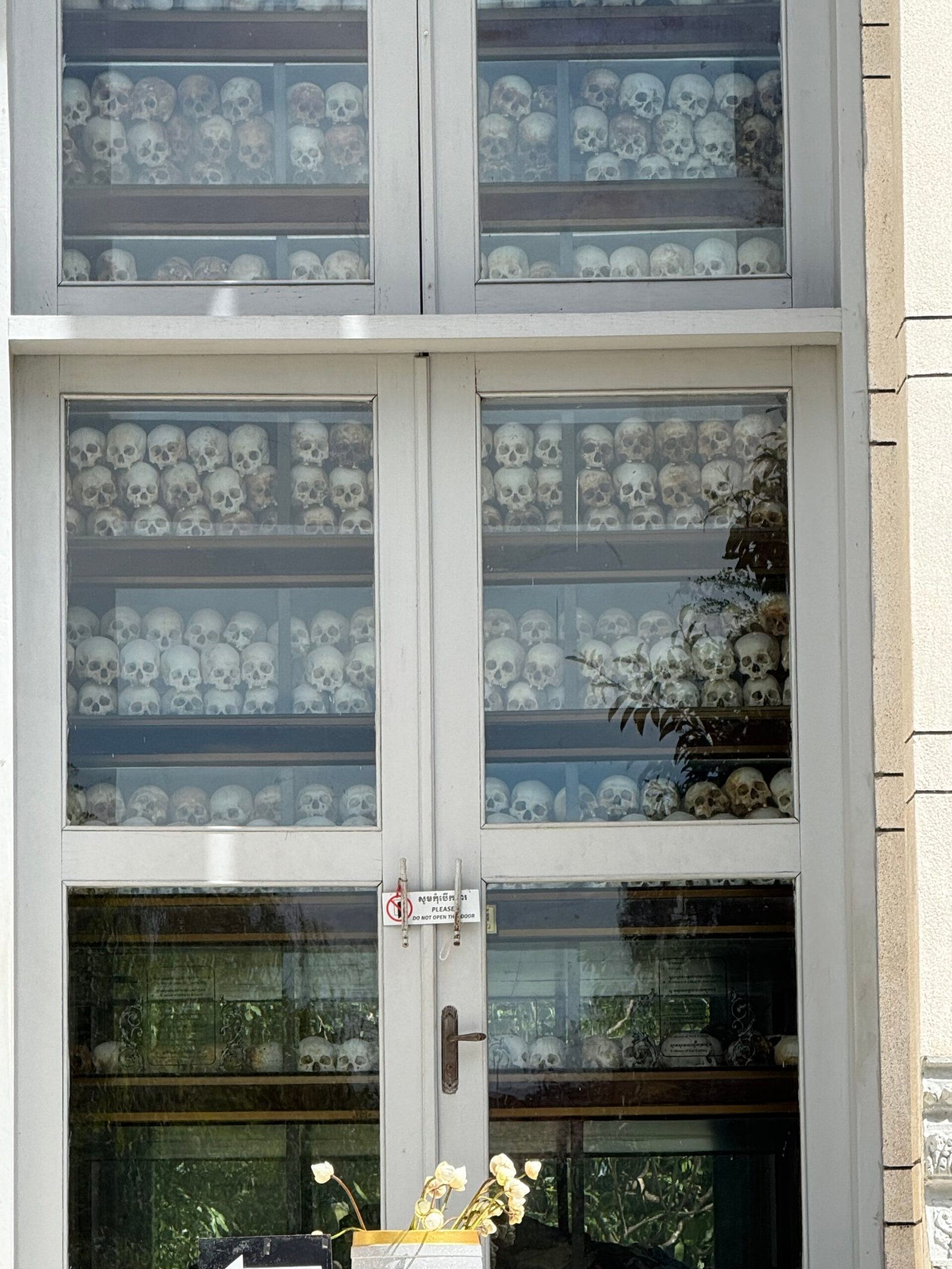
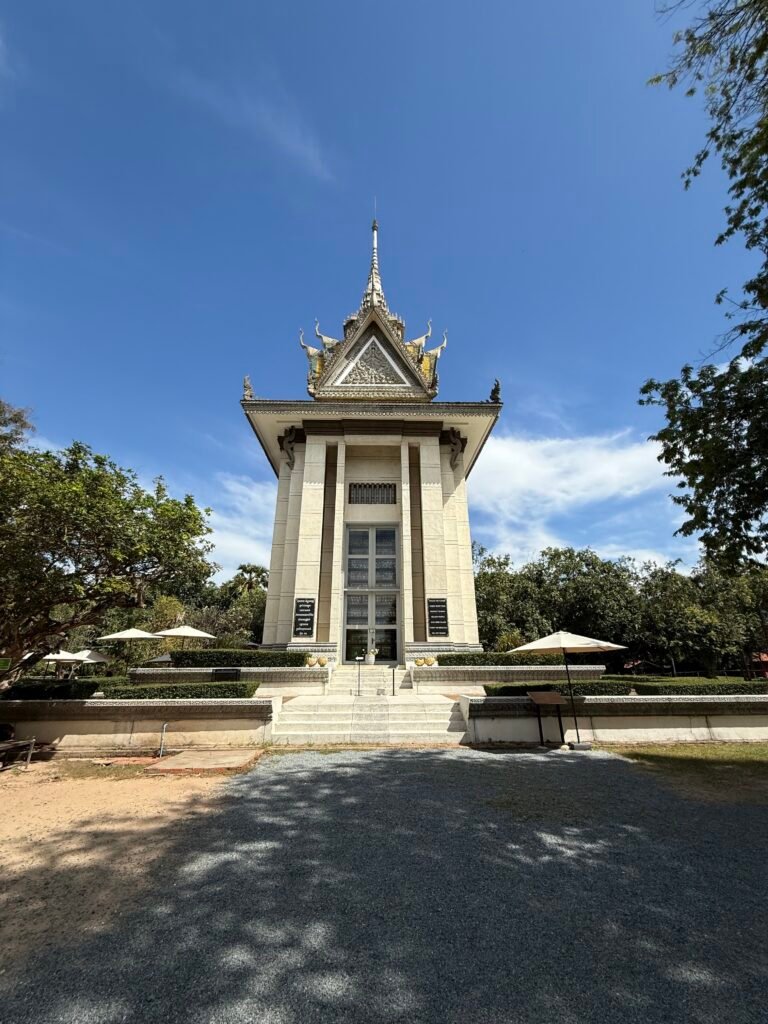
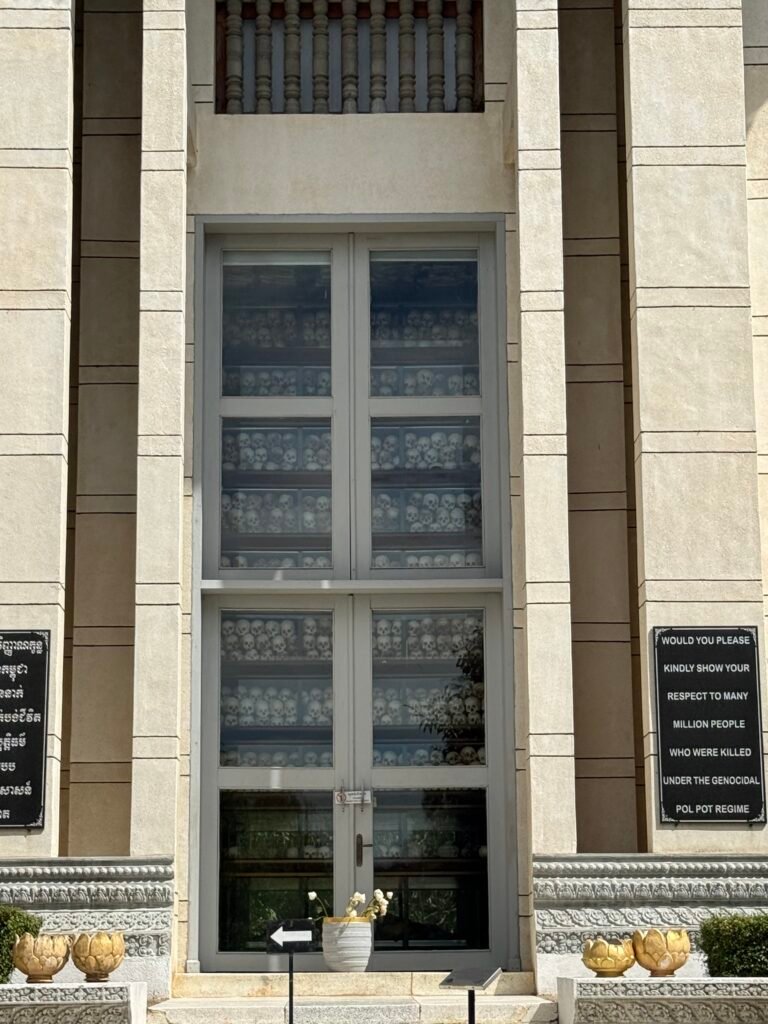
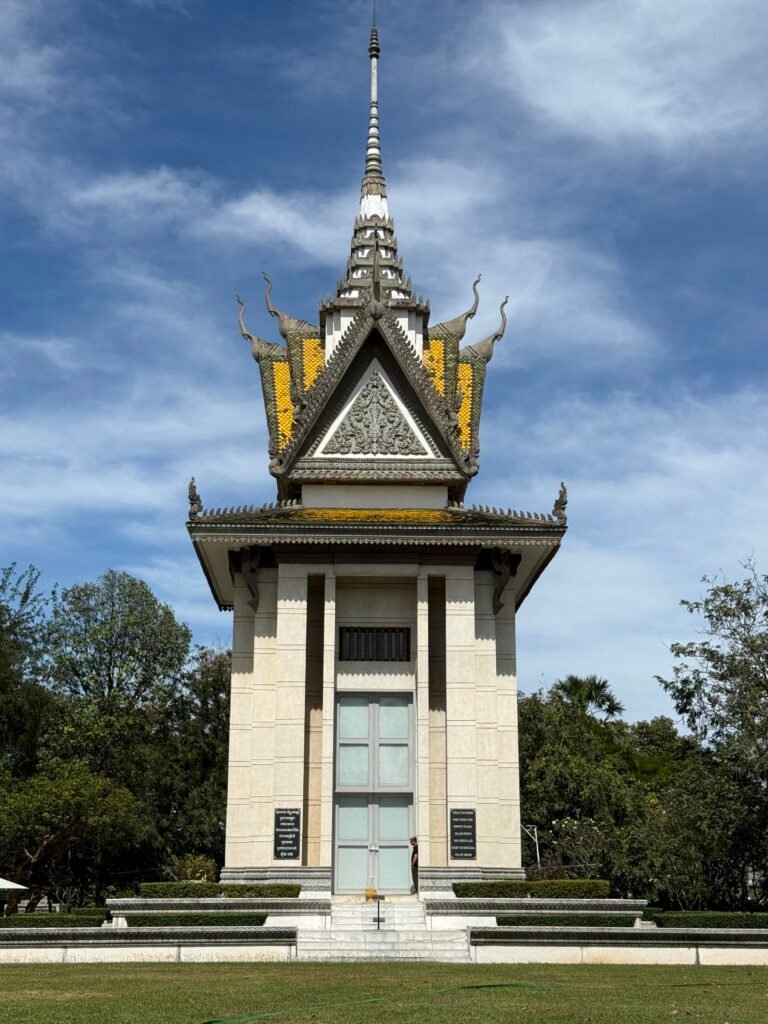
It was breathtaking, and there were a few solemn moments, looking at the monument which was built to remember those who had died at this field, and to replace the wooden huts which were first erected and held the remains shortly after this site was excavated. There are literally thousands of skulls and bones left.
S-21 Tuol Sleng Genocide Museum
What fed the Killing fields? The S21 Tuol Sleng prison. You didn’t need to commit any crime to end up in the prison, if you just looked wrong you could end up here. Academics, business people, those wearing glasses, and anyone (literally anyone) who might know something ended up here. More information is available here on Wikipedia.
Age wasn’t a factor either; if you were old enough to talk then you could be a threat to the regime. In fact, if you couldn’t talk and your mother was incarcerated here then that is where you would spend the final days of your life. There was no release from this prison, other than to The Killing Fields where your fate awaited you. Barbarically children and babies were killed in front of their mother before they in turn were murdered.
The regime believed in not only taking out their potential threats, but to take the whole family out. This included all family members, including children. They didn’t want any chance of the children revenging the deaths of their parents years later. The analogy that was explained to us, and probably originating from the regime was, don’t just cut the grass as it may grow again; rip the whole lot out, including the roots, so there is never a chance of it regrowing. Purely shocking.
The Khmer Rouge
I’m not going to go into the depths of the Khmer Rouge. Contrary to my belief the leaders of the Khmer Rouge were well educated. These weren’t peasants who had an uprising, took over the country, and then killed up to three-million of their own. These were people with good educations, many of which had been earned overseas, including two PhDs; and then came their ideology which set the country on a communist path.
Check out more in-depth information on Wikipedia.