We were looking around for an activity other than temples for a day and Nick came up with visiting a Lotus silk farm.
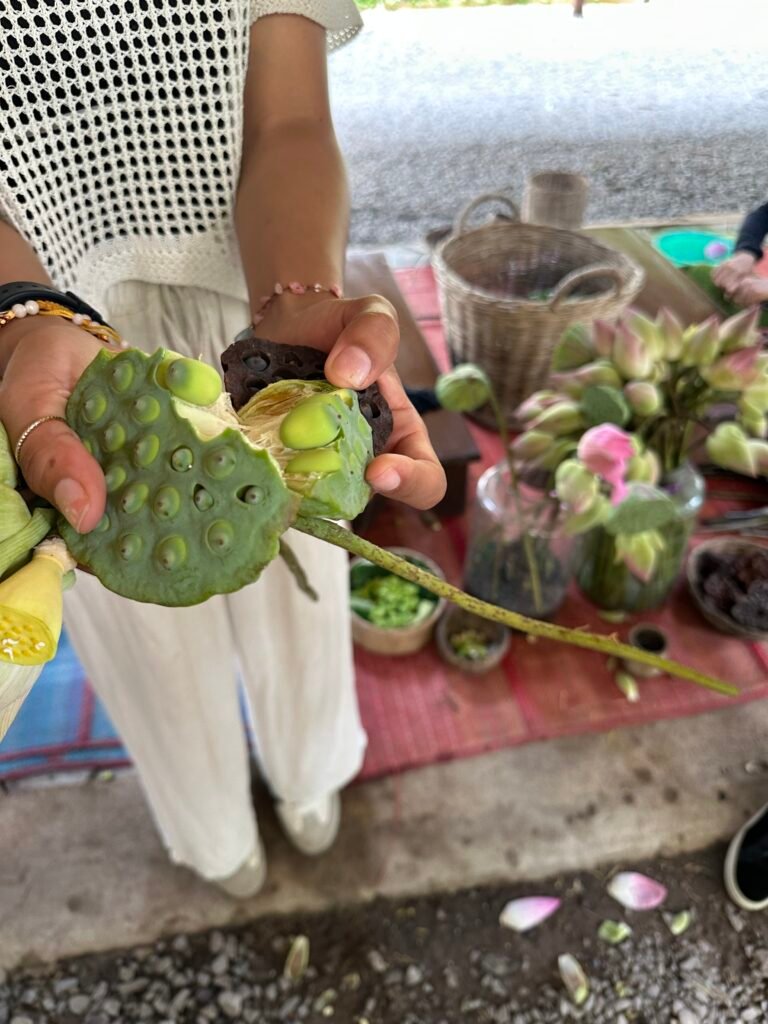
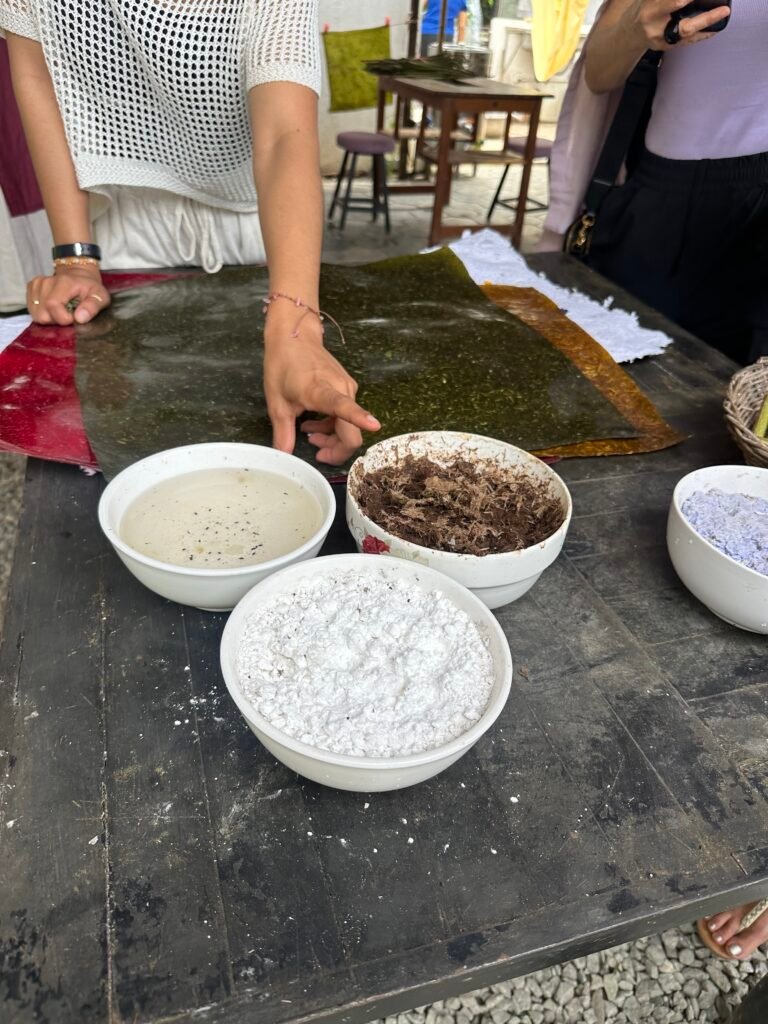
It turned out to be a very interesting tour and it was great to hear the operation is providing meaningful employment for vulnerable local women and caring for the environment and sustainability by using every part of the lotus. We sampled lotus tea and lotus cookies while waiting for the tour to begin and they appear to have made an entire lunch menu with lotus turning up in every course including ice cream.
The initial tour is just a half an hour as an introduction but you could spend hours here taking a boat ride round the lotus ‘fields” and/or doing one of the many artistic activities on offer.
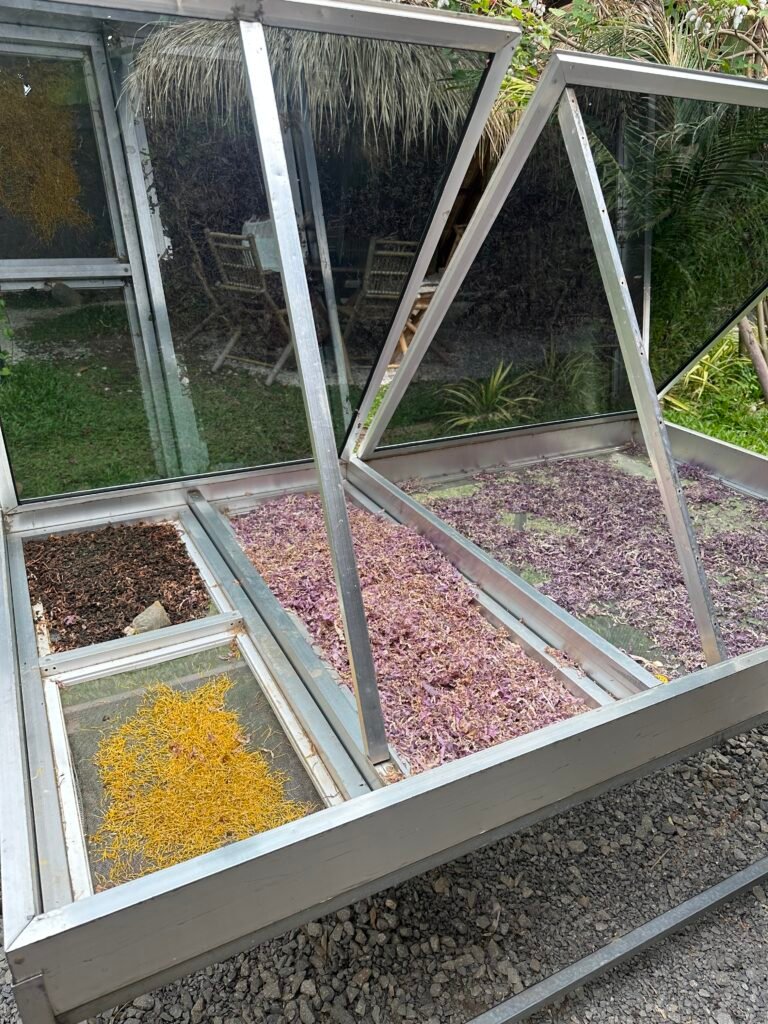
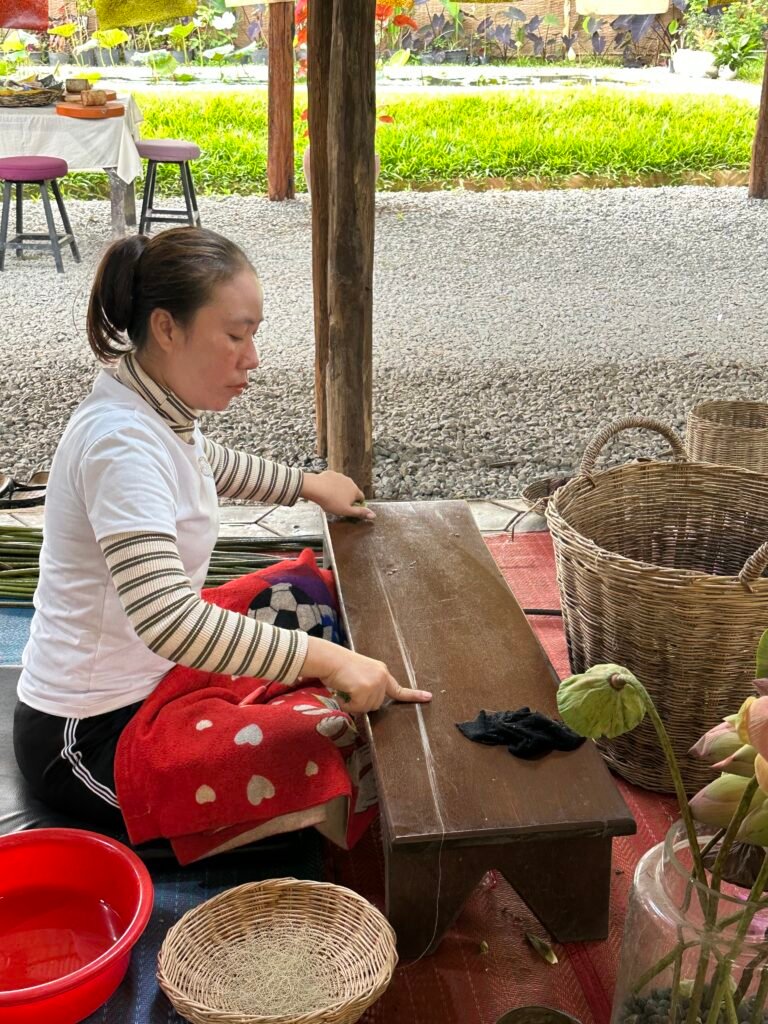
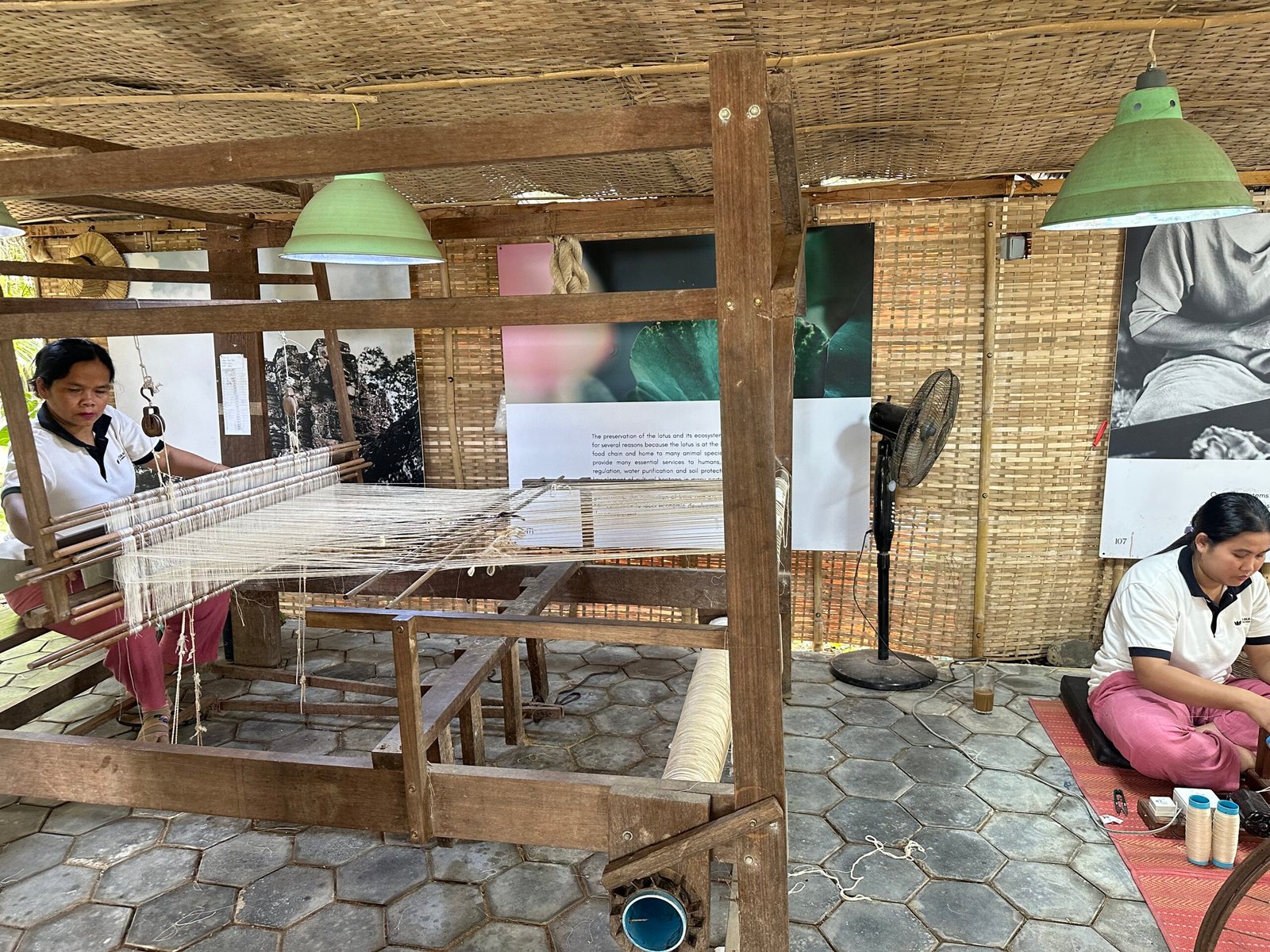
The creation of silk was the most impressive and labour intensive process. They use natural colours for dying including red curry seeds.
Google provides a good summary of the steps which I am blatantly going to plagiarise here:
- Harvesting: Lotus stems are carefully cut from ponds and lakes, typically between April and October when they are available.
- Fiber Extraction: Artisans grip the stems and gently pull, revealing thin, sticky fibers. Each stem yields only a tiny amount of fiber, making the process extremely time-consuming.
- Spinning: The fragile fibers must be quickly rolled together into a continuous thread while still wet (within 24 hours) to prevent breakage, a task requiring great skill.
- Weaving: The delicate threads are then woven on traditional handlooms into fabric.
- Finishing: The woven fabric can be left natural or dyed using plant-based or certified dyes, creating a soft, lustrous, and durable textile.
Here’s link to further information:
https://www.lotussilkfarm.com/en/?srsltid=AfmBOoqTMjs5XYAujiVxIq9jjFfyvQzr_4872xfG_e-zQ_HdCHM1S0RK